
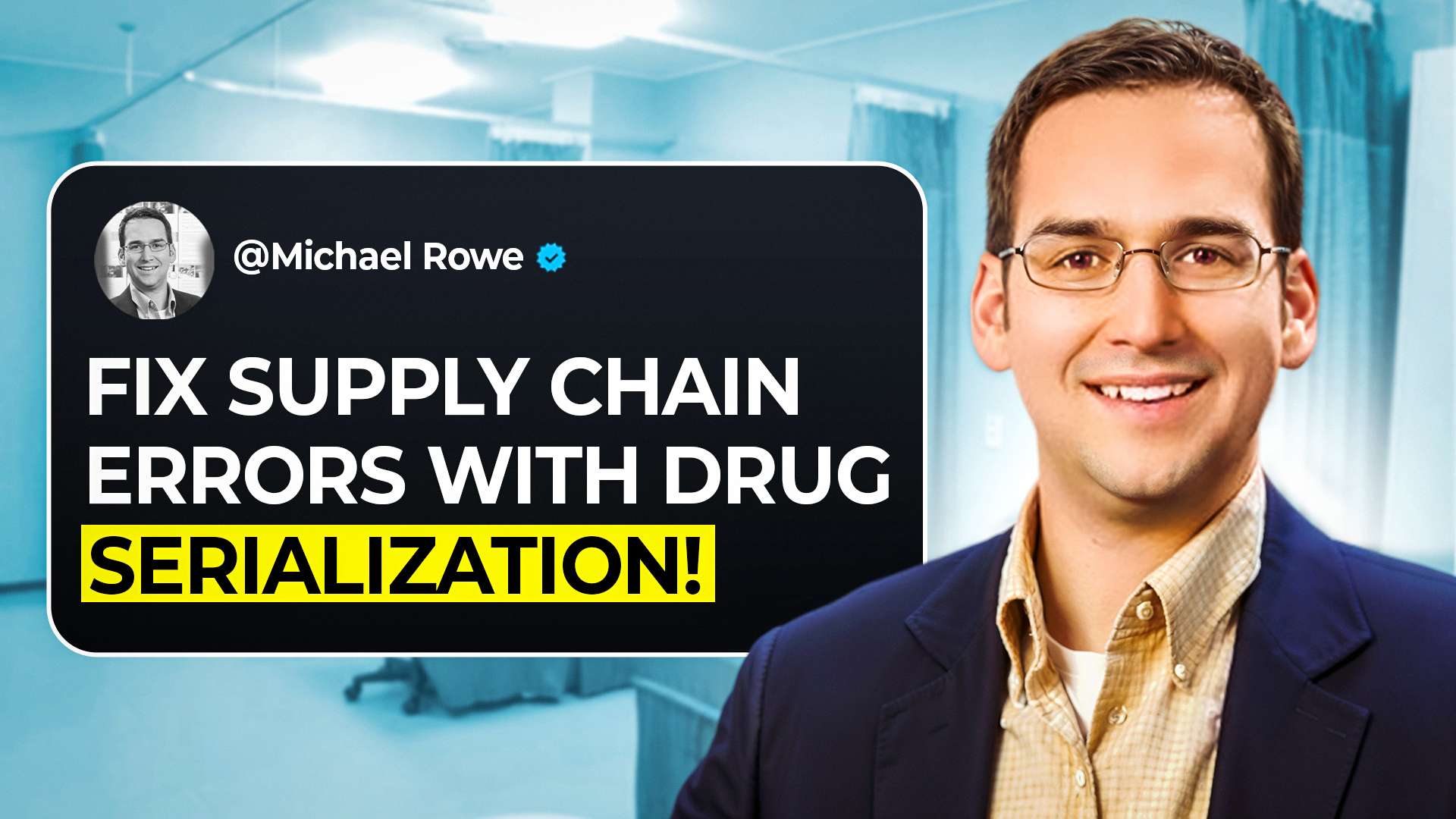
In a recent episode of Life Sciences 360, Michael Rowe, Senior Director of DSCSA and Serialization Services at Two Labs, joined host Harsh Thakkar to discuss the Drug Supply Chain Security Act (DSCSA), the role of serialization, and the strategies companies must adopt to ensure compliance and protect patients.
Their conversation explored the operational and regulatory shifts reshaping pharma logistics, from serialization and digital traceability to industry-wide collaboration and emerging technology solutions.
A National Strategy for a Global Problem
The Drug Supply Chain Security Act (DSCSA), enacted in 2013, was a federal response to the growing threat of counterfeit and diverted drugs entering the U.S. supply chain through a patchwork of inconsistent state regulations. By establishing a 10-year implementation plan for unit-level traceability, the act set the foundation for a unified, national framework that ensures pharmaceutical products can be tracked and verified from manufacturer to pharmacy at every point of the supply chain.
In the podcast, Michael emphasizes that serialization delivers more than regulatory compliance. It enhances operational precision, enables faster, more targeted recalls, and strengthens overall product integrity. “It’s all about protecting the legitimacy of the supply chain,” he explains.
Understanding Your Role: Stakeholder-Specific Responsibilities
DSCSA fundamentally reshaped responsibilities across the supply chain, and understanding where you fit is essential:
- Manufacturers initiate the chain of serialized data, apply serial numbers, and are responsible for investigating and leading investigations during suspect drug incidents.
- Wholesalers must manage product movements precisely, ensuring serialized data matches physical shipments in real-time.
- Pharmacies are now required to verify and validate products upon receipt, closing the loop at the patient-facing end of the supply chain.
Each stakeholder faces unique operational adjustments, and failure by one link can compromise the integrity of the entire chain. Pharmacies, in particular, can no longer assume DSCSA is a “manufacturer-only” initiative.
Technology, AI, & the Blockchain Factor
Technology is quickly changing the role of serialization within the pharmaceutical industry. What once centered on product packaging has expanded into a broader system of real-time tracking, exception management, and digital verification.
Michael highlighted critical technology enablers reshaping DSCSA compliance today:
- Data exchange networks are essential for maintaining a seamless flow of serialized information across a distributed supply chain.
- Blockchain technologies offer potential for enhanced collaboration between trading partners outside of compliance but to facilitate more precise transactions leveraging the serialization data, though challenges around scalability and adoption remain.
- AI-driven exception handling is emerging to help flag and resolve inconsistencies, from data mismatches to shipment anomalies. However, exception handling today remains a heavily manual process for many organizations, underscoring the need for continued investment.
However, at the heart of all of this is industry-wide collaboration. Organizations like the Partnership for DSCSA Governance (PDG) and GS1 are leading efforts to define interoperability standards, support alignment across manufacturers, wholesalers, and pharmacies, and ease the technical burdens, especially for small to mid-sized companies navigating complex serialization requirements.
Client Strategies & Success Stories
Beyond technology, successful DSCSA compliance hinges on a proactive strategy and cross-functional coordination. Michael shares real-world examples of how clients navigate this evolving regulatory landscape in the podcast, emphasizing that early engagement, executive sponsorship, and cross-departmental alignment are key differentiators in successful implementations.
- Early Engagement: High-performing companies started serialization and DSCSA projects years before the enforcement deadlines.
- Executive Sponsorship: Leadership teams that prioritize serialization initiatives ensure faster buy-in across departments and smoother integration.
- Cross-Functional Coordination: Companies that embed DSCSA requirements into quality, operations, IT, compliance, and commercial planning avoid siloed thinking and respond faster to regulatory updates.
The most successful companies view DSCSA not as a mandate but as an opportunity to enhance system resilience, strengthen partner relationships, and future-proof their supply chains.
What’s at Stake?
While full DSCSA enforcement was scheduled to begin in 2023, new deadlines have set in a series of phased milestones of compliance that occur throughout 2025, it was noted that trading partners, especially wholesalers, are moving even faster. They are tightening their requirements, setting deadlines (often earlier than the FDA’s), and requiring greater data precision.
Failure to comply isn’t just about fines or enforcement actions. It can result in disrupted supply chains, reputational harm, and compromised patient care.
Listen to the full podcast here:
Looking to Strengthen Your DSCSA Strategy? Let’s Get Started.
At Two Labs, we recognize that while DSCSA opens the door to a more secure pharmaceutical supply chain, it also introduces new challenges for manufacturers. That’s why we’re here—to help ease the burden and make your transition to compliance as seamless as possible.
Contact us today to request a free consultation and learn how our team can support your serialization strategy, streamline implementation, and keep you ahead of regulatory deadlines.
About Michael Rowe
Michael Rowe (Sr. Director of DSCSA/Serialization Services) is renowned within the DSCSA circles as an expert in this arena with a passion for education. At Two Labs, he leads a team of DSCSA experts and has supported over 60 pharmaceutical companies in their DSCSA compliance efforts.
Before Two Labs, he came from a major wholesaler (Cardinal Health), where he has worked on complex DSCSA projects related to all sectors of the pharmaceutical distribution models. He is also a certified Lean Six Sigma Black Belt.
About Harsh Thakkar
Harsh Thakkar is a co-founder of Qualtivate, a consultancy focused on helping early-stage life sciences companies build scalable quality systems, achieve GxP compliance, and implement digital infrastructure to support FDA readiness and long-term growth. His work bridges regulatory rigor with innovation, empowering companies to navigate complex compliance landscapes with confidence.
Learn more at www.qualtivate.com