

A breakthrough therapy delivers results only if patients can access and maintain it. Across all therapeutic areas, the path from prescription to getting on and staying on therapy involves steps like reimbursement review, prior authorizations, financial navigation, and patient education. In specialty and rare disease markets—where therapies are high-touch and high-cost—each step becomes more sensitive. Even small inefficiencies in benefit verification, documentation, or patient engagement can delay therapy and reduce adherence.
If Patient Support Programs are not properly structured, manufacturers may experience delayed treatment initiation, inconsistent reimbursement outcomes, provider friction, and variability in launch performance. But a thoughtfully designed support infrastructure transforms patient services from a transactional function into a strategic driver of access, experience, and commercial predictability.
From Access Support to Strategic Advantage
Comprehensive Patient Support Programs operate at the intersection of patient experience and commercialization strategy. More than operational infrastructure, their design shapes how patients navigate access pathways and how effectively manufacturers gain visibility into performance across the treatment journey.
At Two Labs, we believe patient services are grounded in structured processes, defined KPIs, and routine review mechanisms. That’s why we conduct program health assessments to evaluate documentation integrity, workflow alignment, and responsiveness to evolving payer and regulatory considerations. These evaluations are designed to help manufacturers identify potential friction points, assess emerging risks, and recalibrate processes based on observed trends.
With more than 100 years of combined patient services experience, our team emphasizes operational discipline, clarity of ownership, and thoughtful oversight throughout each stage of the program lifecycle.
Designing for Scale, Compliance, and Real-World Performance
Patient Support Programs must adapt as markets and payer policies evolve and regulations change. Site-of-care models are expanding beyond centers of excellence. Program design must anticipate and respond to these shifts.
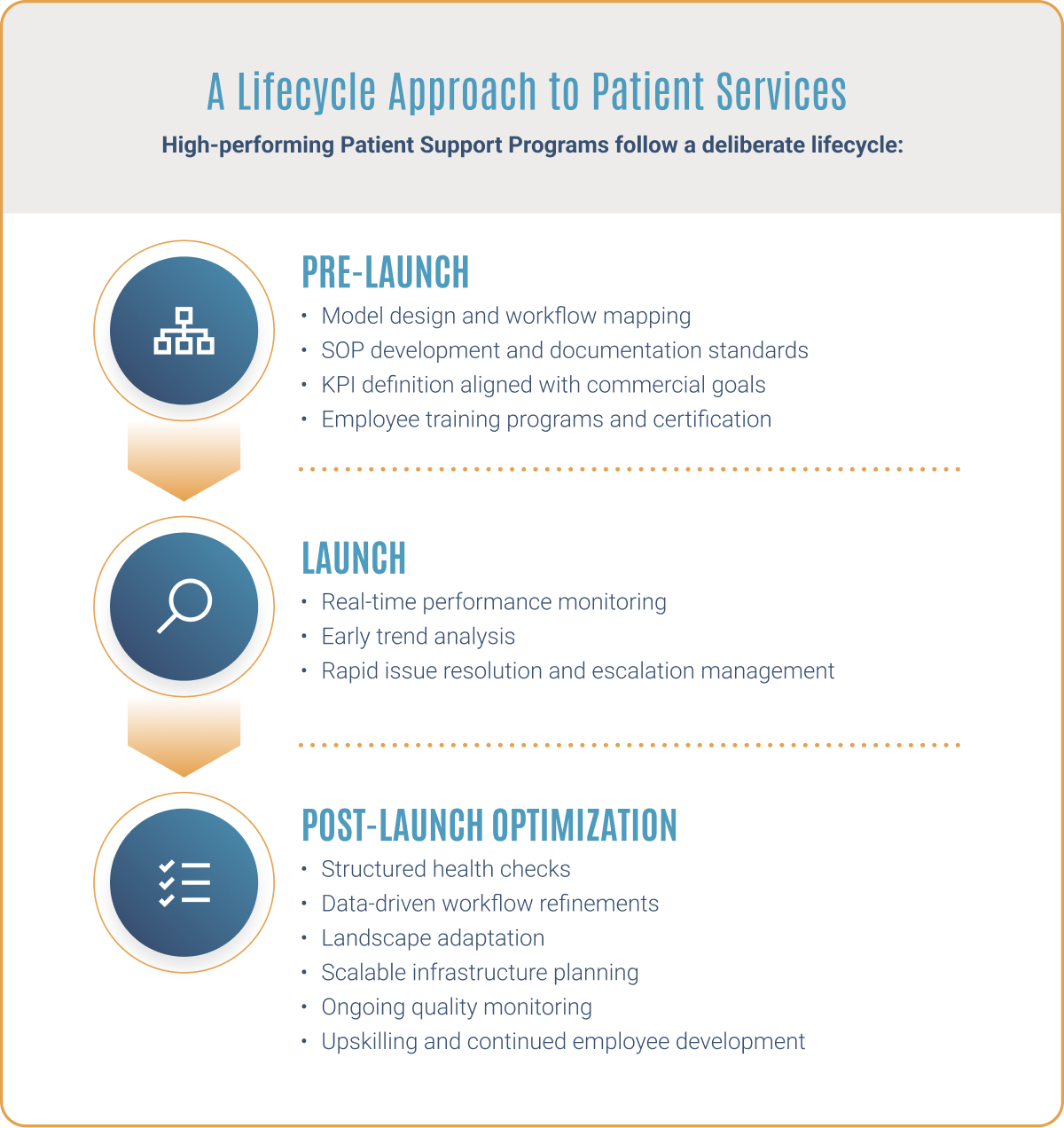
Two Labs works with manufacturers early to create scalable, patient-centered support before launch. This includes:
- Defining hub models and workflow architecture
- Establishing case management pathways
- Aligning SOPs and documentation standards with compliance expectations
- Developing KPI frameworks aligned with commercial planning
- Incorporating benchmarking insights, advisory input, and focus group findings into program design
- Supporting the evaluation and selection of patient services partners to ensure cultural and operational alignment
Our Hub Readiness & Optimization solutions include pre-launch assessments to test workflows and service, revealing any scenario-based gaps before go-live.
However, reaching launch is just the beginning of the program lifecycle. Ongoing assessment and optimization are essential for long-term success.
Structured Evaluation and Post-Launch Optimization
Following implementation, structured program reviews provide a framework for continued evaluation. These assessments may examine:
- Benefit verification turnaround patterns
- Prior authorization and appeal trends
- Case throughput and backlog indicators
- Escalation trends
- Documentation practices and audit preparedness
- Training alignment and quality monitoring findings
- Customer satisfaction insights
Based on evaluations, workflows may be adjusted, work instructions updated, and call guides revised for current needs. This structured approach drives improvement while ensuring compliance.
Programs that are routinely evaluated and recalibrated are better positioned to remain aligned with evolving market, regulatory, and payer landscapes.
The Human Element: Training and Quality as Core Infrastructure
Even strong models need consistent evaluation and ongoing upskilling. In complex reimbursement, case management variability can affect documentation, escalations, and provider experience. Comprehensive training and structured quality oversight are foundational to Patient Support Program success, driving operational excellence and ensuring patients and providers receive the high-quality support they depend on.
At Two Labs, we believe meaningful employee training is based on identifying and training to clear roles, therapeutic nuances, and program workflows. We customize curriculum by role and format—using live sessions, digital modules, simulations, and knowledge checks. This blended method reinforces knowledge through repetition, engagement, and real-world application while accommodating different learning styles.
Quality oversight complements training. Reviewing calls, system documentation, and adherence to processes reveals gaps for targeted coaching. Ongoing quality evaluation provides manufacturers with insight into areas of opportunity, celebration, and intentional uptraining.
By combining training, call simulations, and ongoing quality monitoring, manufacturers maintain operational consistency over time.
The Strategic Impact
High-performing Patient Support Programs take time to establish but are crucial for a product’s future. As therapies become more complex, investing early in structured, tailored support and regular program evaluations position manufacturers for consistency and stakeholder trust. Patient services go beyond access—they include advocacy, education, and treatment experience.
If you’re preparing for launch, reviewing your hub model, or seeking clarity in patient services, Two Labs can help. We partner with manufacturers to design, implement, and optimize long-term support strategies.
Connect with our experts today!

Emily Campbell
Director of Training,
Development, and Quality

Lisa Skinner
Director of Operations,
Patient Services